
The UK Gambling Commission has launched a scathing public rebuke of Meta, accusing the tech giant of enabling a sprawling ecosystem of illegal gambling advertisements across Facebook and Instagram. The fallout extends far beyond British borders – with Germany emerging as one of the worst-affected markets, where an estimated €250 million annually flows into unauthorized campaigns.
We also recommend that you read: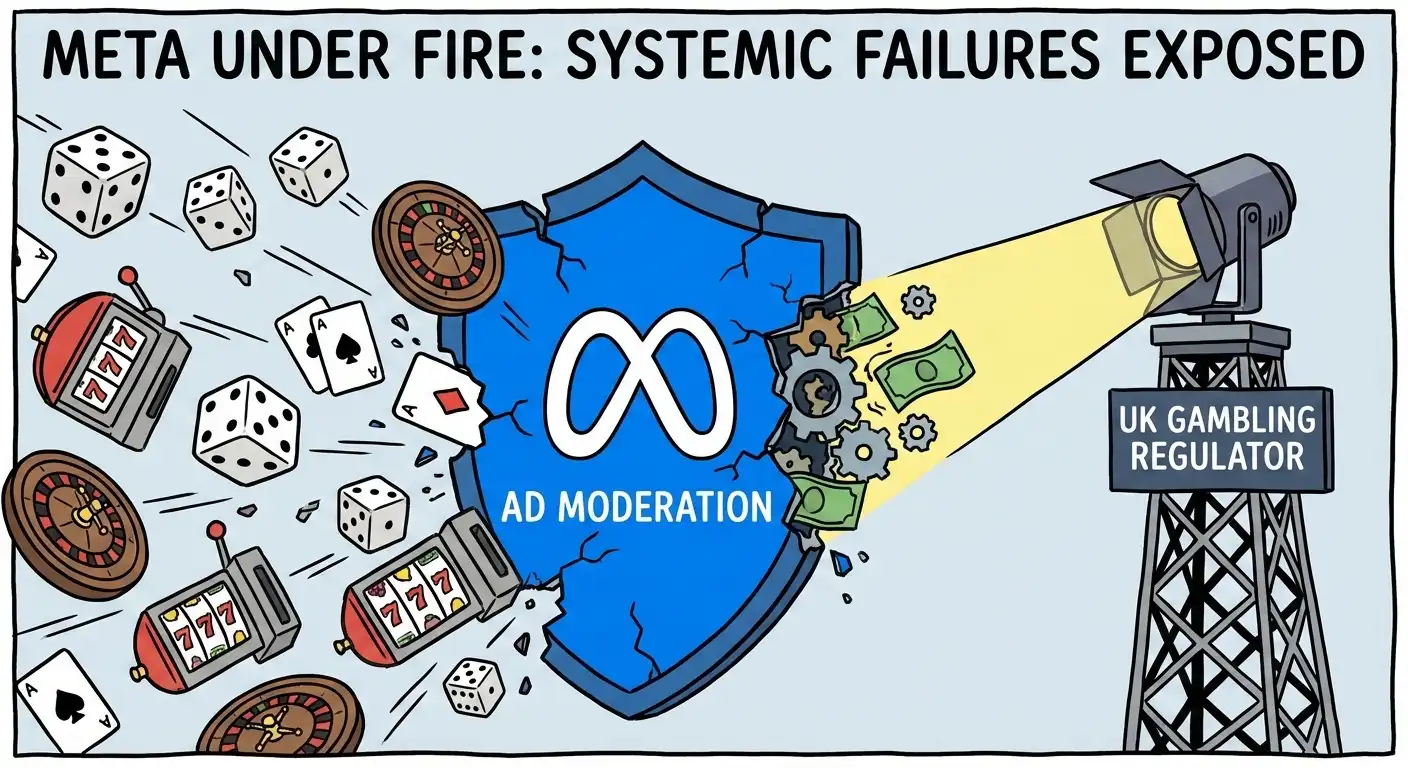
In a rare and pointed public statement, the UK Gambling Commission has called out Meta for what it describes as a systemic failure to police unlicensed gambling promotions on its platforms. According to the regulator, ads for operators lacking valid British licenses are routinely served to millions of users – including minors and individuals vulnerable to gambling harm.
Under UK law, only licensed operators may advertise gambling services. The Commission’s position is unambiguous: Meta is not meeting its obligation to enforce these rules. The company’s internal content moderation systems, the regulator argues, are simply not fit for purpose when it comes to filtering out illegal gambling content.
This is not an isolated complaint. It feeds into a growing global conversation about the accountability of Big Tech in curating the advertising that fuels its revenue engine.
While British regulators raise the alarm, Germany faces an even more staggering scale of the problem. Since the Interstate Treaty on Gambling (Glücksspielstaatsvertrag, or GlüStV) took effect in 2021, advertising for unlicensed online casinos has been explicitly prohibited. Yet enforcement remains a distant aspiration.
Annually, roughly €250 million is poured into illicit gambling ads on Meta’s platforms in Germany alone – a figure that dwarfs the entire advertising budget of the country’s legal gambling industry. A snapshot from October 2025 revealed more than 75,000 unauthorized gambling ads indexed in Meta’s own Ad Library, offering a damning paper trail of inaction.
The consequences ripple outward:
Germany’s Joint Gambling Authority (Gemeinsame Glücksspielbehörde der Länder, or GGL) maintains a whitelist of approved operators, but Meta largely disregards it. Unlike more tightly regulated advertising environments, the GGL lacks the direct legal authority to sanction Meta. By the time reported ads are taken down, they have often already reached millions of viewers.
The tactics employed by black-market operators are increasingly sophisticated – and disturbing. Algorithms are reportedly used to target users with a history of gambling behavior, while deepfake videos and fabricated celebrity endorsements lend a veneer of credibility to fraudulent campaigns.
Two of Germany’s most prominent brick-and-mortar casinos – Spielbank Stuttgart and Casino Baden-Baden – have publicly warned that their names and branding are being hijacked in scam advertisements. Spielbank Stuttgart has announced plans to pursue legal action against Meta directly. In both cases, victims who were lured by fake promotions have been documented.
These schemes don’t just evade taxes – they circumvent every player-protection measure that licensed operators are required to implement, from deposit limits to self-exclusion registries.
The pressure on Meta is mounting from multiple directions. The UK Gambling Commission is reportedly weighing formal sanctions. In Germany, there is growing political momentum to equip regulators with stronger tools to hold technology platforms directly accountable for the content they monetize.
For legitimate gambling operators, the damage is twofold: they face unfair competition from unregulated rivals, and their reputations suffer by association with the flood of fraudulent ads appearing on the same platforms.
The standoff highlights an uncomfortable truth about the current regulatory landscape: national gambling laws are only as effective as the platforms that serve the ads. Without international coordination and enforceable obligations for tech companies, the gap between regulation and reality will continue to widen.
Meta has yet to issue a comprehensive response to the allegations.
The standoff between regulators and Meta is not just a policy debate – it has real consequences for real people. Every fraudulent ad that slips through moderation filters represents a potential victim: someone who deposits money into an unlicensed platform with no recourse if things go wrong, no deposit limits to protect them, and no regulator to turn to for help.
As someone who closely follows the online gambling industry, I find the scale of this problem deeply troubling. The fact that black-market operators outspend the entire legal gambling sector on advertising within Meta’s ecosystem tells you everything you need to know about the platform’s priorities. Until tech companies face genuine financial and legal penalties for profiting from illegal content, self-regulation will remain a hollow promise.
For players, the takeaway is simple but critical: never trust a gambling ad on social media at face value. Always verify that an operator holds a valid license before depositing a single cent. Stick to platforms that have been independently reviewed and tested by trusted sources. If you’re unsure where to start, resources like WagerManiacs.com offer thoroughly vetted casino reviews, covering everything from licensing and security to payout speed and bonus fairness – so you can play with confidence rather than gamble on the legitimacy of the casino itself.
The fight against illegal gambling advertising will ultimately be won – or lost – at the intersection of regulation and technology. But until that battle is settled, the best defense any player has is knowledge and vigilance.

Hi everyone, my name is Alex and I am an author and SEO specialist at wagermaniacs.com. I have been doing SEO for many years and am recognised by many casino sites as an expert in this field. I also love online casinos, poker and sports betting. I am a dedicated fan of what I do. That’s why you can trust me with the most challenging tasks!
Alex’s favourite online casinos: Stake, Bitstarz, Fresh Casino
Favourite casino games: Space Wars, The Dog House, Voodoo, Deadwood, Chicken Road
Email: info@wagermaniacs.com