

The Rise in the Number of Fake Accounts on Social Media
You’ve probably encountered this too: you’re scrolling through your social media feed and see an advertisement for a familiar casino or gambling establishment. You don’t suspect anything, but when you see a promising offer in the ad, you’re consumed with curiosity. A big bonus awaits you. Maybe even cash.
This way of thinking can be your undoing. Fake casino advertisements are rampant on social media. They lure you to fraudulent websites to steal your confidential data, account information, and deposits.
That’s why in this article, we’ll tell you what casino fraud on social media is. You’ll learn what these fraudulent profiles look like and which casinos are susceptible to this type of fraud.
This is how Fraudulent Fake Profiles Operate.
Fraud involving fake casino accounts on social media is easy to explain. Fraudsters create a profile and pretend to be a well-known casino. They choose a suitable name, add realistic photos and write posts on behalf of the supposed casino.
In short, they position themselves as an authoritative and popular casino that players trust. This can be described as a modern form of identity theft.
Fraudsters publish tempting offers on behalf of the casino. They advertise things like no deposit bonuses or free spins. Users are then redirected to fake casino websites or even offered to download an app. Often, these casinos do not even offer online gambling.
Unsuspecting users are then asked to enter their payment details or even make a deposit. They remain convinced that they are playing at a well-known casino. However, they are actually handing over their confidential data to fraudsters. This can lead to significant financial losses.
This type of fraud works due to several factors:
- Fraudsters take advantage of the good reputation of well-known and reputable online casinos.
- They create deceptively realistic profiles that are almost indistinguishable from the original.
- They lure potential customers to their fake websites with attractive offers.
- They deceive unsuspecting users by requesting deposits or asking for payment details.
The exact technical methods used by fraudsters have not yet been established. However, it can be assumed that they deliberately use automation and AI to spread fraudulent content as quickly as possible. Plagiarism of authentic casino content is also not uncommon.
Why are Such Fake Accounts so Dangerous?
Fake casino advertising is a serious problem for both users and casinos themselves, and, in our opinion, it is not discussed enough. The consequences can be disastrous.
- Risks for players: For users, the greatest risk associated with fake advertising is potential financial loss. If a deposit is made, the money is lost. If payment details are disclosed, fraudsters can steal large sums of money. Entering personal data can also have far-reaching consequences, as identity theft is possible if confidential information falls into the hands of fraudsters.
- Consequences for fraudulent casinos: For the casinos affected, the loss of trust is a huge problem. Fraud on social media can seriously damage a casino’s reputation. As they often have little opportunity to counter fake advertising, they are virtually powerless and can only warn others about the fraud.
Of particular concern is that these are usually fake casino accounts on Instagram and Facebook. Social media plays an increasingly important role in many people’s lives, significantly influencing their gaming behaviour, which further increases the risk of fraud.
Large-scale Fake Advertising Campaigns in the United States
Fake casino advertising is a global problem. Our research has shown that large-scale fake campaigns are also being run in the United States. In recent months, there have been increasing reports and warnings that social media is flooded with fake advertising.
Users from the United States confirm on Reddit that they are often shown fake casino advertisements on Facebook and the Telegram app.
This has been a serious problem for local casinos in North Dakota, where they have advertised online gambling and used branding similar to Spirit Lake Casino in Devils Lake. This occurred against the backdrop of a legislative initiative to legalise sports betting and obtain permission to build a new tribal casino in the Grand Forks area, designed to expand Native American gambling opportunities.
It seems that fake casino advertising is very common in the United States, especially on social media. In addition to Facebook, the Telegram messenger also appears to be a popular platform for scammers. This may be because gambling on Telegram is generally very popular.
Fake Casino Advertising on Telegram: Gambling Giant Stake in the Spotlight
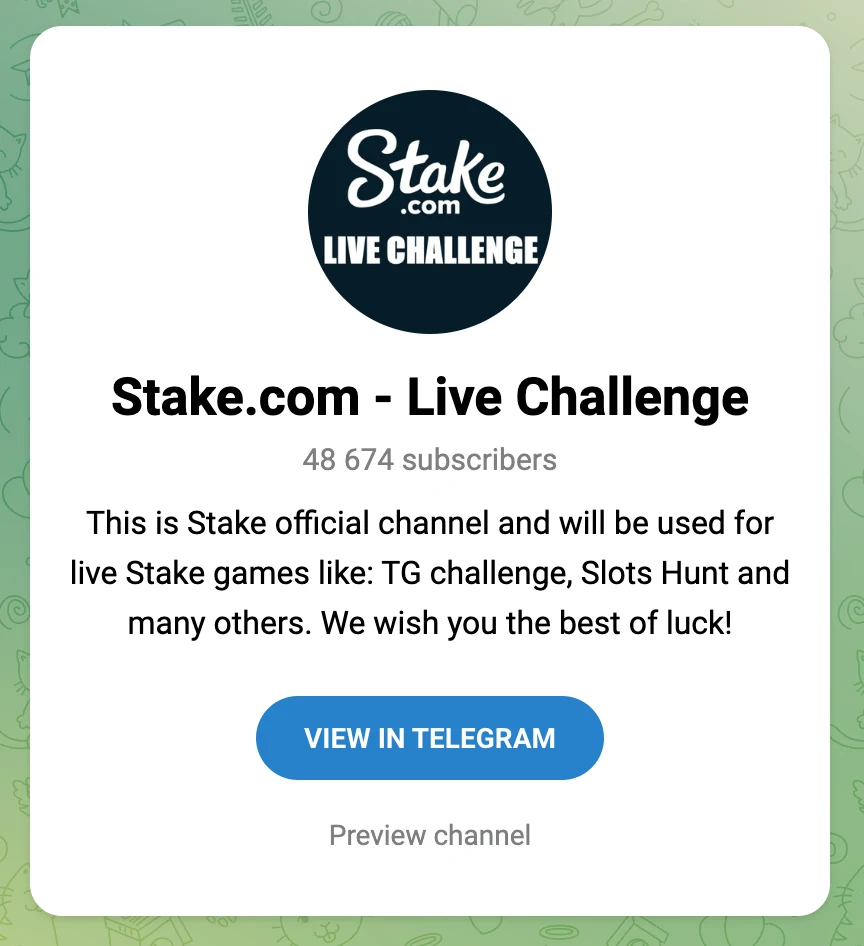
A user from the United States informed us that he constantly sees fake casino advertisements on Telegram. He is a member of the Stake.com Live Challenges channel. This channel, which has nearly 50,000 members, allegedly publishes advertisements on behalf of Stake Casino.
The advertisement appears deceptively realistic and promises a bonus of 350%. Clicking on this link launches an automated chatbot. This bot provides users with daily codes and bonuses. It is supposed to even allow users to contact Stake’s customer support service through this chatbot.
If users request the bonus, they receive a link to a 350% or even 500% bonus. And this is where the danger begins: this is a deposit bonus. Users only receive it if they deposit funds in advance. This is how scammers take their victims’ money.
The bot informs them that to receive the 350% bonus, they must deposit at least $100. Deposits of up to $50,000 are even possible. In this way, scammers obtain not only large sums of money, but also personal information, including payment details.
This example shows how quickly gullible users can fall for fake casino advertisements.
Tips: How to Spot Fake Accounts and Protect Yourself from Scammers
If you find an advertisement and are unsure of its authenticity, the following aspects may indicate a fraudulent profile:
- Spelling mistakes in the name or minor changes to the official name
- Unrealistic offers and promises (excessively high bonuses, sensational offers, etc.)
- Links to other websites or to download an unknown application
- Advertisements for casinos without any licences
- No information about legality and licensing
- Recently created accounts with few followers
- Unprofessional profile with generic photos and spelling mistakes
- Minimal deviations in the URL
- Questionable payment requests through unsecure payment service providers
Therefore, always be vigilant before clicking on any advertisement. It is best to always enter the domain manually and check it in advance on specialised sites such as ours (Wagermaniacs.com). Do not fall for unrealistic offers and under no circumstances make payments through casino advertisements on social media.
Source of the picture: https://pixabay.com/illustrations/phishing-fraud-cyber-security-3390518/

Hi everyone, my name is Kevin and I am an author and creative manager at wagermaniacs.com. I have extensive experience in the field of gambling, as well as more than 15 years of experience playing in online casinos. These two facts allow me to be called a real expert in the field of iGaming.
My favourite online casinos: Vavada, Casino-X, Riobet and Mostbet