
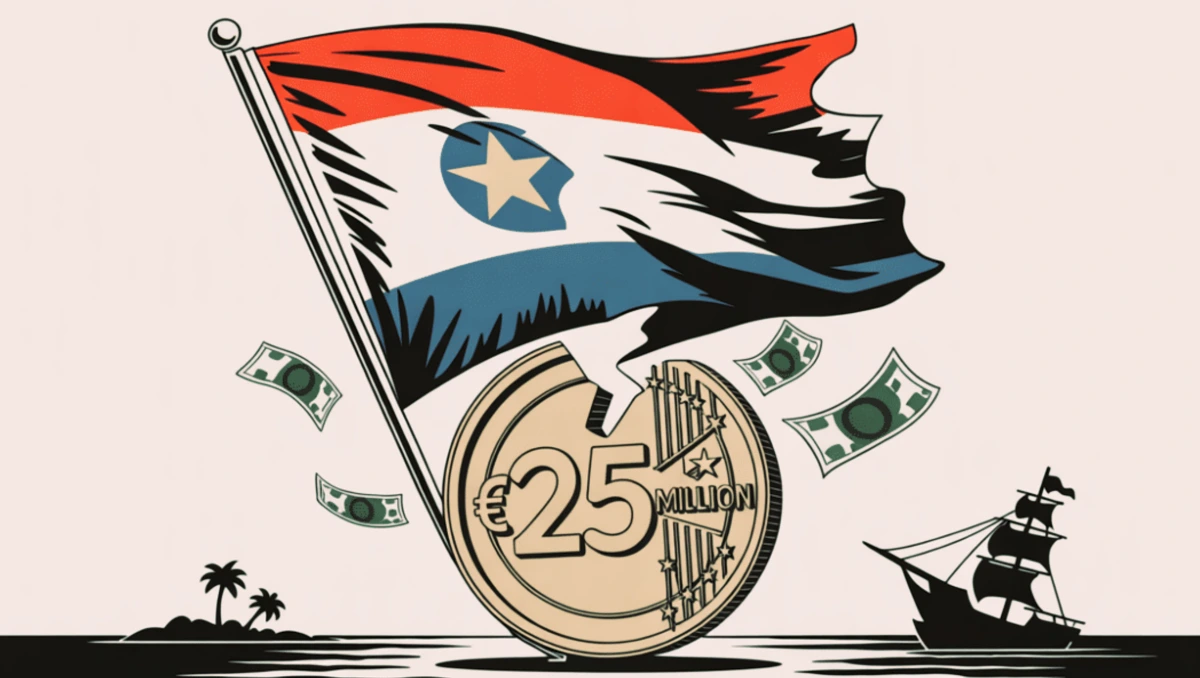
Novatech Solutions N.V. just got hit with a €24.85 million penalty from the Kansspelautoriteit — the KSA, which is the gambling watchdog in the Netherlands. It’s the biggest fine the authority has ever issued. A second company, Fortaprime SRL, picked up a €1.8 million fine on the same day. Between the two, regulators pulled nearly €27 million out of unlicensed operators in one go.
Two Websites, Zero Compliance
Novatech ran Qbet.com and 55Bet.com. Neither site had a Dutch gambling license. Neither site blocked Dutch players from signing up. There was no age verification. No responsible gambling tools. And both platforms happily accepted crypto deposits and anonymous payment methods — which, predictably, caught the attention of anti-money-laundering investigators as well.
It wasn’t a case of missing one checkbox on a compliance form. Novatech skipped the entire form. They operated wide open in a regulated market, ignored every safeguard that licensed operators are required to maintain, and apparently assumed no one would bother coming after them.
The KSA bothered.
€25 Million Was the Maximum. The Regulator Wanted €100 Million+
Dutch law puts a ceiling on regulatory fines: 10% of the company’s annual global turnover. That ceiling is what produced the €24.85 million number. KSA chairman Michel Groothuizen went on record saying the fine would have crossed €100 million if the statute allowed it.
He didn’t have to say that. Regulators usually let the fine speak for itself. The fact that Groothuizen went out of his way to publicly state the number he actually wanted to charge tells you something about the mood inside the KSA right now. There’s real frustration. Licensed operators spend millions on compliance. Unlicensed ones spend nothing and compete for the same players. That imbalance is exactly what enforcement actions like this are supposed to correct.
There’s also growing political support in the Netherlands for raising the fine cap. If that legislation passes — and similar discussions are already underway in other EU countries — future violations won’t have a 10% safety net.
Who Is Fortaprime?
The Novatech fine grabbed all the headlines, but Fortaprime SRL caught a €1.8 million penalty in the same sweep. This company ran a string of unlicensed brands: AmonBet, Supraplay, Bilucky, GXSpins, Kaasino, HiddenJack, and LuckyMax7. All accessible from the Netherlands, all without a license.
Fortaprime’s fine was smaller because the company’s turnover was smaller. The KSA applied the same 10% formula. Going after both operators at once was deliberate — it shows the regulator isn’t picking one target for a PR headline. They’re running systematic sweeps.
Half the Money Still Goes to Illegal Sites
The Netherlands opened its legal online gambling market in October 2021 under the Remote Gambling Act. More than 20 operators hold licenses now. The system works, at least on paper. But the KSA itself estimates that 53% of all online gambling revenue in the country still ends up with unlicensed platforms.
Fifty-three percent. In a country with a functioning regulatory system and two dozen licensed casinos to choose from. The KSA also says 94% of Dutch gamblers use at least one legal site — but enough of them also play at offshore operations to push more than half the total money outside the regulated perimeter.
Why? The usual reasons. Unlicensed sites offer fatter bonuses with no wagering caps. No deposit limits. No mandatory cooling-off periods. No KYC checks asking you to upload your passport. For a certain type of player, that’s a more attractive package than what licensed casinos are allowed to offer. And until the cost of running those sites becomes unbearable, they’ll keep showing up.
The KSA’s strategy is to make that cost unbearable. Whether a €25 million fine achieves that is an open question, but the direction of travel is obvious.
Why Players Should Care
The KSA doesn’t fine players. That’s not how this works. But if you have money sitting in an account at an unlicensed casino and the regulator shuts it down or freezes its payment processors, that money is gone. There’s no complaint form. No ombudsman. No segregated player funds. You’re playing at a site that has already demonstrated it doesn’t follow rules — expecting it to protect your balance is optimistic at best.
Licensed platforms carry costs that unlicensed ones don’t, and those costs ultimately pay for things like player fund protection, dispute resolution, and operational transparency. That’s the trade-off. You get slightly less generous bonus terms, but your money is actually accounted for somewhere.
Enforcement Is Ramping Up Everywhere, Not Just the Netherlands
The KSA fine happened in the same month as a pile of enforcement moves across multiple jurisdictions:
- New Zealand kicks off its iGaming licensing process in July 2026. Only 15 operator licenses will be issued. Anyone operating without one faces fines up to NZ$5 million.
- Malta Gaming Authority released its 2026 supervision plan, with tighter scrutiny on crypto payments and sports betting integrity.
- Gibraltar passed new gambling legislation to overhaul its regulatory framework from scratch.
- UK Gambling Commission brought in a new operations director and rolled out stricter reporting requirements for operators starting March 19.
- Google tightened gambling ad policies with new certification requirements taking effect March 23.
None of these things happened in coordination. Different countries, different timelines, different political motivations. But the net effect is the same: the regulatory walls are getting higher, the fines are getting larger, and the enforcement teams are getting bigger budgets. 2026 is turning into the year where regulators stopped warning and started billing.
What Comes Next
The Novatech fine will be appealed — these things almost always are. Whether the €24.85 million holds, gets reduced, or gets upheld won’t change the broader trajectory. The KSA has shown it will use the full extent of its current powers, and there’s active pressure to expand those powers further.
For offshore operators targeting regulated European markets: the math is changing. For players: if your casino doesn’t hold a license in the market you’re playing from, you’re carrying risk that you don’t have to carry. There are enough solid, licensed options out there that gambling at a site with no oversight is a choice, not a necessity.
And if €25 million in fines doesn’t convince the remaining unlicensed operators and crypto casinos to rethink their approach, the next round of legislation probably will.

Hi everyone, my name is Kevin and I am an author and creative manager at wagermaniacs.com. I have extensive experience in the field of gambling, as well as more than 15 years of experience playing in online casinos. These two facts allow me to be called a real expert in the field of iGaming.
My favourite online casinos: Vavada, Casino-X, Riobet and Mostbet
[…] of a broader regulatory tightening cycle that’s hard to ignore. We’ve covered the €25 million Dutch KSA fine on Novatech, the Swedish credit-gambling ban, and the New Zealand iGaming licensing rollout. Each one […]